Thursday, September 18, 2014

Good morning, South Beach

  Good morning, South Beach Part Deux


For one of the last classes of the spring semester, students met IPC Visual Lab instructor Carl Juste on South Beach for an early morning assignment. "Just take pretty pictures," he said. Carl pointed out that there were plenty of ingredients for pretty pictures: bright colors, architectural details, golden light, beautiful people.


Jennifer Kay thought to herself, "... but I don't take pretty pictures. I see weird South Beach, shapes and shadows, not pretty South Beach." She came upon a group of silhouetted people saluting the rising sun.


And then she came across an element that had eluded her during her shooting for her previous "South Beach Morning" project: a airplane flying within frame across the blue sky. Something pretty came out of the shoot after all.


Share your views of South Beach in the morning in the comments or by email! What elements do you look for when you're shooting in an environment as target rich as South Beach?

Monday, September 8, 2014

A Walk through Utah


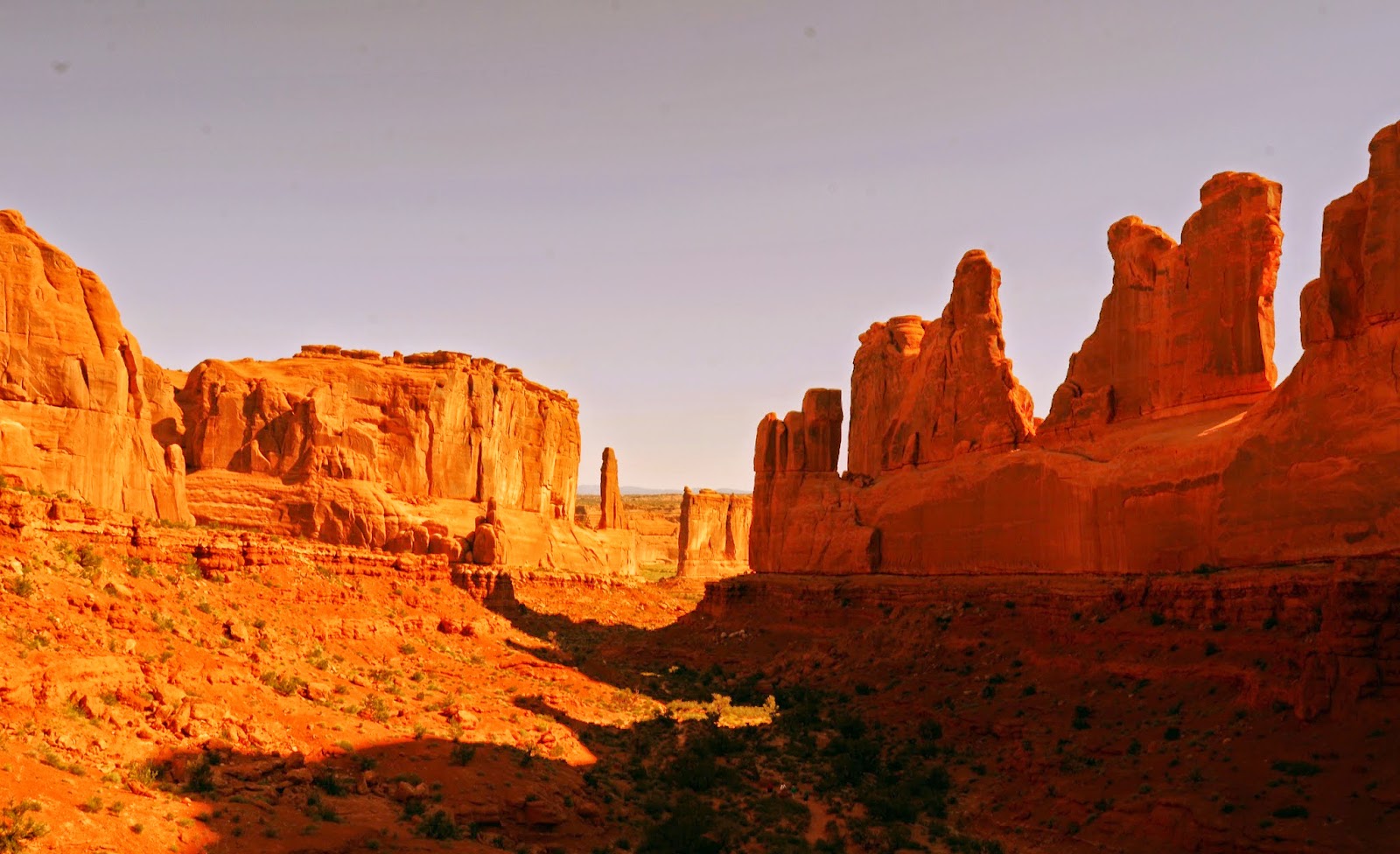
JKay recently took a hiking trip to Utah, where she walked through Salt Lake City and Arches National park in Moab. "I looked for ways to show the vastness of the environment around me - the size of the landscape, the contrast of the harsh light, the dryness and the breadth of scenery so different from the cluttered urban area where I live."


Friday, July 11, 2014

JKay On Assignment


Jennifer Kay writes for The Associated Press, and she recently found herself on assignment without a photographer. She would have to take pictures to accompany her article. Here's how she coped with the challenge:

I was assigned to cover the launch of Fabien Cousteau's 31-day underwater living experiment in the Florida Keys. Cousteau left from a dock in Islamorada on a bright, sunny Sunday morning. I wanted    to make sure that we had fresh images of Cousteau, just in case something went wrong with his month-long underwater expedition. Otherwise, we only had hand-out photos that were taken in 2012 when he had last visited the underwater base. As Cousteau and his crew gathered for a press conference on their boat, I put my recorder at their feet to collect audio so that I could add their quotes to my story. Then I sat as close as I could to their boat without getting in the way of the television cameras around me and pulled out both my point-and-shoot camera, which has a zoom lens, and my DSLR with a fixed 50 mm lens. Cousteau and his crew stood on a white boat under a blazing mid-morning sun, so I knew the challenge would be balancing that white boat with the dark shadows thrown on their faces.


I tried to frame each shot to highlight Cousteau, the focus of my story, as well as some of the details around him, such as the mission logo on the wetsuits hung behind him, or the life jackets that signaled where the crew was standing, or the Nokia camera phones that the crew would use to film their project. While Cousteau emphasized the team effort that was sending him 63 feet below the ocean's surface for a month, I looked for moments when I could isolate Cousteau, the grandson of ocean exploration pioneer Jacques Cousteau.


To see more of JKay's story and photos, see the AP story here. What would you have done differently?

Friday, June 27, 2014


"Finding Vivian Maier" is a documentary that explores the life of a nanny who secretly may have been one of the greatest street photographers of the 20th century.

Some IPC Visual Lab students saw the film after class recently.

Anthony Harris says Maier seemed to be a private person: "No one really knew what and how she thought or what her passions may have been. Our only insight of her is through her vast amount of photography. Her in-your-face, daring, almost challenging approach to her subjects is inspirational and motivational to me in my development as a photographer. Her use of light, knowledge of her camera, composition is brilliant. ... Maloof deserves a ton of credit for bringing her work to us."

Jennifer Kay left the film wanting to know less about Maier as a person and wanting more time to sit and study her work: "The mystery of Maier is a great story, but I wonder if she had led a more 'conventional' life or had a more socially acceptable personality, would we be as enraptured by her work? I tried to think of another artist who left so little documentation about his or her artistic motivations and aspirations behind -- no correspondence, no journals, no cameos in the work of contemporary artists, no exhibits or articles -- and the only comparable artists I could think of were the ancient people who left haunting paintings in caves -- we don't know why they left them, we just know that we respond to them. Do we really judge people on their art, or do we judge how good the behind-the-scenes story is first? What if there was nothing but the art to look at? My favorite part of Maier's work/story (will they ever be inseperable?) is seeing a new perspective from the 1950s and 1960s. It's not often anymore that we see something new from those decades. The film also made a good point about how Maier shot from the hip with her twin-lens camera, the perspective of a child that altered the posture of her subjects. I hadn't thought about shooting from the hip in that way before, and I wonder what would happen to my photographs if I started shooting that way."

Have you seen "Finding Vivian Maier"? Leave a comment with your thoughts about the film and continue the conversation!

Monday, May 26, 2014

Hard Light


Photographers often talk about the golden hour and good lighting. What happens, though, when you don't have the light you want?

Since starting this starting this semester's lighting course, I've started to think more about the times when I'm shooting in hard lighting situations -- for example, at night under harsh exterior lights, in a dark gym lit only by a handful of spotlights and outside at midday in bright sunlight. It wasn't hard to find the light in these situations, but it was hard to work around their limitations.

Outside the theater, I could have used a flash to illuminate the crowd, but the crowd wasn't my focus. I wanted to focus on the theater's neon lights and the marquee with the name of the play I was seeing. Unfortunately, the marquee was only half-lit at the time. I chose to focus on the blue neon, choosing a camera setting that would saturate its color and at the same time still show the backlit crowd.

In the gym, I first pulled out my DSLR because of its higher iso settings. However, my 18mm - 55mm lens made all the netball action look flat, even when the iso was adjusted to compensate for the gym's poor lighting. I switched to my point-and-shoot camera with a surprisingly steady 300mm zoom and set the camera to 1600 iso, the highest iso it has. Forced to choose, I chose depth over light, knowing that if I could get close enough to my subjects from the court's sidelines, there should be enough light to illuminate the action. 


When I came upon an apparent fashion shoot at midday on a bright, sunny day, I wondered why the shoot was happening at all. Wasn't that breaking all the lighting rules I had just learned? The women shooting on Virginia Key didn't have a scrim or a diffuser or a strobe to fill in the dark shadows I assumed the harsh light was casting on the model's face. Maybe that's the look the photographer was going for - maybe she was seeing something I wasn't in all that sunlight reflecting off the model's white clothes. Maybe that was her vision. I just kept thinking there had to be a better way to get those shots, without hoping that editing software would save the image. I made my image with my camera set to a "beach" setting and a low iso to compensate for the sunlight, and I ended up pleased with the image I was able to make -- I hope the other photographer was pleased with her work as well. 

What would you have done if you were in J Kay's place?  Leave a comment with your fixes for hard lighting situations!
Jennifer Kay uses her Leica point-and-shoot during a netball game and set her camera at 800 ISO in order to stop the action and retain some image quality inside the dark lit gym.
inside the dark gym.


Flash vs. Natural Light


Generally, I shoot mostly with natural light _ I'm comfortable working within the limits of naturally lit scenes. This semester, however, I've branched out to include strobes, diffusers and other light sources in my compositions. Luckily, I have two perfect, amenable subjects who don't mind if I make mistakes while they play. On my last two trips to my brother's house, I experimented with a flash and diffuser mounted on the top of my DSLR. My aim for using the flash was to light the kids' faces without harsh shadows, but in using the flash I lost the warmth of the ambient light.


On my most recent trip, I tried to compensate for the shadows created by multiple light sources and a reflective table. I lost warm skin tones, though, when I fired the flash.


Bouncing the flash off the ceiling fills in the shadows and casts light back underneath the chin (due to reflective table), hence reducing hard shadow and giving an even distribution by the flash.


Bouncing the flash off the ceiling fills in the shadows and casts light back underneath the chin (due to reflective table), hence reducing hard shadow and giving an even distribution by the flash.


The most useful use of my flash was outside at noontime in direct sunlight. The shooting the flash directly at my subject, I was able to fill in the deep shadow on my nephew's face.

Saturday, April 26, 2014

Reflected Light

 
In the first class of the spring semester, IPC Visual Lab instructor CW Griffin challenged us to manipulate natural light before we started thinking about picking up strobes. For our first homework assignment, we had to find a surface that would reflect light, then use that surface to create a portrait in which the subjects were lit by light through a window and backlit by light through a window. 
 
The kids' easel in my brother's home had one side that was plain white, and standing next to a window, it reflected light even on a cloudy, rainy day. I had my brother sit with the window lighting the left side of his face, then I had him sit as close to the easel as possible so that the white surface lit up the right side of his face. I also had the children stand facing the easel, with their backs to the window, so that the white surface illuminated their little faces. The results   were softly lit portraits of people I love.


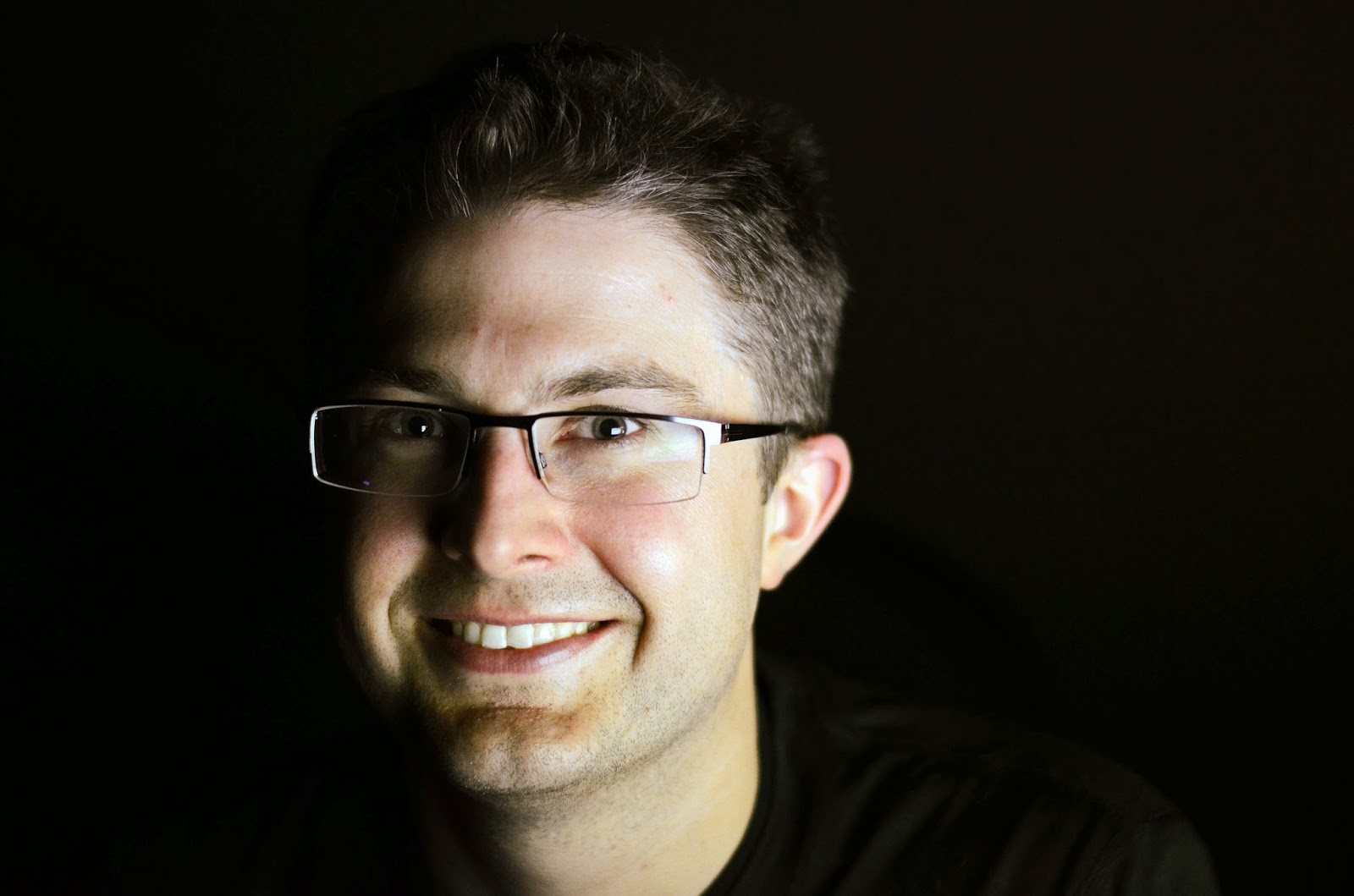
I found another reflective surface - one of my brother's computer screens. In a darkened room, from less than 2 feet away, the screen lit up my brother's face as much as a strobe. The result was a dramatically lit headshot that uniquely utilizes the tools my brother and I use the most - a computer and a camera.

Editor's Note:  Ms. Jennifer Kay is finding light in unusual places by utilizing reflective materials and
unorthodox light sources.  Hence, she creates a natural feel and ambiance when she takes advantage of all the light that is available without over powering her subjects.

Friday, April 11, 2014

The Purple Court


Photo by JKay at the Sony Open tennis tournament on Key Biscayne.

I was sitting high up in the stands with the zoom maxed out on my point-and-shoot camera. Since I wasn't going to get great detailed shots of the players during points, I tried to focus on some of the tournament's more quiet details. When the new crew of ball boys and ball girls started their lap around the court during a changeover, I knew they would line up with the alley and that their uniforms would contrast nicely with the tournament's unique color scheme.

Saturday, February 22, 2014

IPC VISUAL LAB SPRING SEMESTER


This 10-week photography program is a total immersion experience designed to provide instruction and hands-on training in the art of digital photography. Students are encouraged to be creative, but are also taught to think of each project as a concise statement of artistic, documentary, and/or journalistic intent. You will learn concepts that range in scope from beginner theory on the technical control of your camera settings to advanced topics in post- production & composition. Personalized attention and review is provided by award winning photojournalists Carl Juste and C.W. Griffin, whose teaching approach is refreshing, fun and very engaging.

Please follow us on Facebook and Twitter.  You can email us at ipcvisuallab@gmail.com.

Wednesday, November 6, 2013

Catching the Sun


IPC Visual Lab student Tomas Hauff is fascinated by the sun as it slowly ascends into the the morning sky.  For past few months, Hauff has transformed his morning cycling escapades into a subject of visual enterprise.  "No two sunrises are the same" proclaims Hauff as he documents the ordinary into spectacular collective images of sunrises.  Hauff makes the sun his primary subject hoping to catch the visual promise of a better day.  


Hauff quickly learned of the upcoming hybrid eclipse and knew that the capturing of this eclipse would require research and technical improvisation. So began the great experiment of placing sheets of wielding glass together and mounting them in front his zoom lenses. Though Hauff had preferred to have long glass, the experiment yield still an amazing image of the special hybrid eclipse of 2013.


The Greek poet, Homer, understood the power and beauty of the sun and wrote about its travels as the Greek god, Helios, who gives light both to gods and men: he rises in the east from Oceanus, though not from the river, but from some lake or bog (limnê) formed by Oceanus, rises up into heaven, where he reaches the highest point at noon time, and then he descends, arriving in the evening in the darkness of the west, and in Oceanus. (Il. vii. 422, Od. iii. 1, &c., 335, iv. 400, x. 191, xi. 18, xii. 380.) Source: http://www.theoi.com/Titan/Helios.html


On Sunday, November 3, 2013 at 6:48am Hauff captured the hybrid eclipse of 2013 from Matheson Hammock just as the sun and the moon emerged from behind the low hanging thick clouds that was covering the horizon. It was a partial solar eclipse, one of only two this year. It started in Africa, crossing the Atlantic. In the US it could only be seen from the East Coast as this was the end of the eclipse's path.  The hybrid eclipse of 2013 was visible from only within a thin corridor, which traverses the North Atlantic and equatorial Africa. It was seen within the much broader path of the Moon's penumbral shadow, which includes eastern North America, northern South America, southern Europe, the Middle East and Africa according to NASA official website.

Thursday, October 10, 2013

Beach Ballot 2

Vote in the comments - which one of these images would you include in an installation highlighting the color and character of South Beach in the early mornings?
 
Jennifer Kay has embarked on this multimedia project exploring her neighborhood in video and still images. She started this project to share the South Beach she experiences every day, focusing on the elements of light and space in the early mornings. 
 
In preparation for an exhibition, we are asking the public to assist in the selection of final still images to accompany the video "Sunrise Beach." In this second installment, which of these three images from Ocean Drive would you select for an exhibition? Before making your selection, please view the video that inspired this project: http://vimeo.com/74517861


Monday, October 7, 2013

Beach Ballot 1


Jennifer Kay has embarked on this multimedia project exploring her neighborhood in video and still images. She started this project to share the South Beach she experiences every day, focusing on the elements of light and space in the early mornings. 

In preparation for an exhibition, we are asking the public to assist in the selection of final still images to accompany the video "Sunrise Beach." In this first installment, which of these three images from South Pointe Park would you select for an exhibition? Before making your selection, please view the video that inspired this project: http://vimeo.com/74517861

Vote in the comments!

Thursday, October 3, 2013

Young Teacher

What does a 4-year old knows?  More than you think.

Miles a curious, self determined, and precocious 4-year old tagged along for a 90-minute
photography class at the Little Haiti Cultural Center.  At first, like most children, Miles bounced
around peering, pulling, and pushing objects but not being too disruptive as the instructors conducted class.  To our amusement, Miles often echoed phrases and words he heard during instruction.

After the tutorial period, each student was given an specific color to photograph and was released out to the neighborhood in search of their subjects.  I thought maybe it would be interesting to hand over my precious Lumix camera to Miles in order to give him an activity to occupy his time and his endless source of energy.

Miles quickly grabbed the camera and started pressing the buttons while gazing at the Lumix as if it was a puzzle.  Little fingers all over the front glass, Miles looked up and smiled.  I wondered what are
his expectations?  What would he capture and would there be anything worth viewing?

The teacher was transformed to student, as I followed this visual curious young person and started relearning the importance to photograph with curiosity.  He pointed to the left, right, up, down, through, and over objects.  Never saying much but just watching and probing.

Not once did I see any frustration or disappointment.  Miles just kept on being the curious boy and I became more fascinated about the outcome of his endeavors.

Later, I presented some of the images shot by this young visual story teller to the class and was astonished by his honesty, perspective, and curiosity.   Judge for yourself!  Let us know your thoughts?

Class dismissed!


Friday, September 27, 2013

Who Am I?


IPC Visual Lab students are encouraged to engage in visual discovery of self.  IPC Visual Lab student Andriana turns her camera upon herself and giving us a slight view of the complexity of her identity as she transforms to being a photojournalist.  

Who am I? What defines me, what sets me apart? A question, the answer to which might seem so obvious, but nevertheless complex. Who you are is who you learn to be in an everlasting process of transformation…

TO BE A WOMAN… Such a wonderful world is that of a woman. It’s about abundance and intensity of emotions, vulnerability, passion and compassion, beauty and love, tears and laughter – unfortunately often mistaken for weakness.  A woman is a creature always alert, always alive, always in search. She can be the artist, the scientist, the leader; or she can be a mom, a wife, a grandma; she can also be a lover, a girlfriend or somebody’s passion. But what makes her stand out – is that often she can be many of the above performing all with greatness. A woman’s world is very broad – it’s never simple. It’s a destiny of struggle on attaining perfection in everything she does. A woman is a layered creature; to underestimate her power is foolish and mischief.


TO BE IN LOVE… Doing what you love can wear you out at times.  There are such days when… you wake up at 5 am to be on location for the sunrise to photograph that surfer who will ride the wave of his life. The winds are perfect, the sky is clear enough. You are excited to greet another amazing day. What can be better than call this work? You get to the beach, unload your truck, a few heavy bags full with lenses and gear press on your shoulder, a tripod is balancing on the other, cameras are hanging on your neck defying gravity – you sprint like a foal. You rush to get that golden hour. The sky is still clear, only a small cloud is looming but you don’t think it’s going to come your way. The surfer is warming up, catching small waves, incrementally pumping the adrenaline. The sun is almost perfectly aligned. You are all set to catch him wrapped in the wave, but the sun is still short on shining through the cyan clear water. Everything seems perfect but that cloud. It looks like it stubbornly shifts his anger toward you. He is lonely in the sky; you can’t blame him for wanting some attention. Can you be mad with nature? How can you? You welcome him and let him pour his deep emotions. It’s overwhelmingly serendipitous. The only thing is that you can’t share the glory. It’s his time to shine.  Such is the nature of your work. You can’t say you didn’t show up for work – but you have nothing to show for your results. You realize that the only thing that keeps you trying is doing what you LOVE! You get home; you are tired, but soon ready to take on another shot.


TO BE A LEARNER… Life is such a blessing, so surprising; always ready to prove you that you don’t know enough. It’s generous to teach you everything you need to know to face it with more wisdom and perhaps more joy. How lucky are we to have the testimonies of those who passed along? Those who thought about the things, way too important to ignore? Those who made mistakes enough to learn a better way… and then share it with those willingly to take on the relay race, to build upon… Books, photographs, tapes – comprise a history, experiences; they are the voice that lives forever. You identify with that; you live YOUR life, you make your own conclusions. And then it’s time for you to do the same. Cause a change, share, excite, and make work that matters – ‘cause then you die. And what is it that you leave behind?

                                                                                      Andriana M.

Friday, September 20, 2013

Sunrise Beach


Video by Jennifer Kay

South Beach. Everyone thinks they already know everything about it. Topless beaches, grisly crimes, restless crowds, flashy cars, neon and police sirens, plastic people and pastel buildings. It’s the South Beach that’s rude and bold and famous. 

People ask me why I live at the beach, and I think they expect an answer that glitters. Something about the beach’s frenzy or the Art Deco or the way everyone looks in the heat.

They expect the tourist beach. I live at the beach, though, and it’s not the same place.

I set out on this visual journey to share the South Beach that I experience. It’s a quieter place, where people live and work instead of showing off and partying. I set out in the mornings, shortly after sunrise, to highlight the difference between my neighborhood and “South Beach.” In those early hours, the light is softer. You can see the discipline that balances the beach’s hedonism, the workouts that perfect the famously fit bodies and the workers cleaning up the previous night’s activities. There’s room to move in the mornings, and even room and time to pause, because the crowds are still asleep. 

When I moved to Miami, I chose to live on South Beach because, of course, I wanted to live near the water. I also wanted to live in a neighborhood where I could walk around, where I didn’t require a car, where I could feel energized by my environment instead of feeling overwhelmed, and where I could see other people utilizing the beach in similar ways. These images are my reasons for still living on the beach.


Friday, August 16, 2013


Iris PhotoCollective Visual Lab is offering a unique photography course that will examine visual storytelling in the classical vein of photojournalism. Through collaborative exercises, discussions, critiques and lectures, students will develop the skills necessary to reveal a strong visual story in their photographic images. Students will explore the works of photograph masters Henri Cartier-Bresson, Roy DeCarava, W. Eugene Smith, Margaret Bourke-White, and other acclaimed photographers.

This ten-week visual communications course focuses on special techniques and strategies for understanding photography through analytical thinking. The course is led by award-winning photojournalists Carl Juste and C.W. Griffin. A top visual communicator in the field of photography will also contribute as special guest speaker. Three levels are offered from beginner to intermediate and advanced. Weekly classes run Saturdays from September 14 through November 22, 2013 at Little Haiti Cultural Center, 5212 NE 59th Terrace, Miami, FL 33137.

For course information, call Carl Juste at 305.796-4718, or ipcvisuallab@gmail.com. Iris PhotoCollective Visual Lab is a partnership amongst Iris Foundation, Iris PhotoCollective,
The Haitian Cultural Arts Alliance and Little Haiti Cultural Center. 

OPEN HOUSE: September 6, 7pm, at the Little Haiti Cultural Center. Come meet students and teachers and talk about taking your photography to the next level!


Monday, May 6, 2013

Lens Fixed @ 18mm


The day first started with class and then it ended up with a collage of images of babies. Shooting with an 18mm lens is not easy.  Trying to compose correctly becomes
a challenge and makes one yearn for
other focal lengths.  Lens choice is as important as choosing the right tool for the job.


The lighting’s pretty nice on the baby and mom and friend, but there’s too much background distraction.  I wanted some background for context, but it’s too in focus.


The approach in photographing children is to bring the camera down to their perspective.  In other words giving a child's view of the event.  Dad’s busy signing up for more pink tutus and cupcakes.  If I’d waited a bit longer the figure behind the dad might have walked out the picture too, which would have made it simpler, more focused, however by then I might have lost eye contact with the little girl.


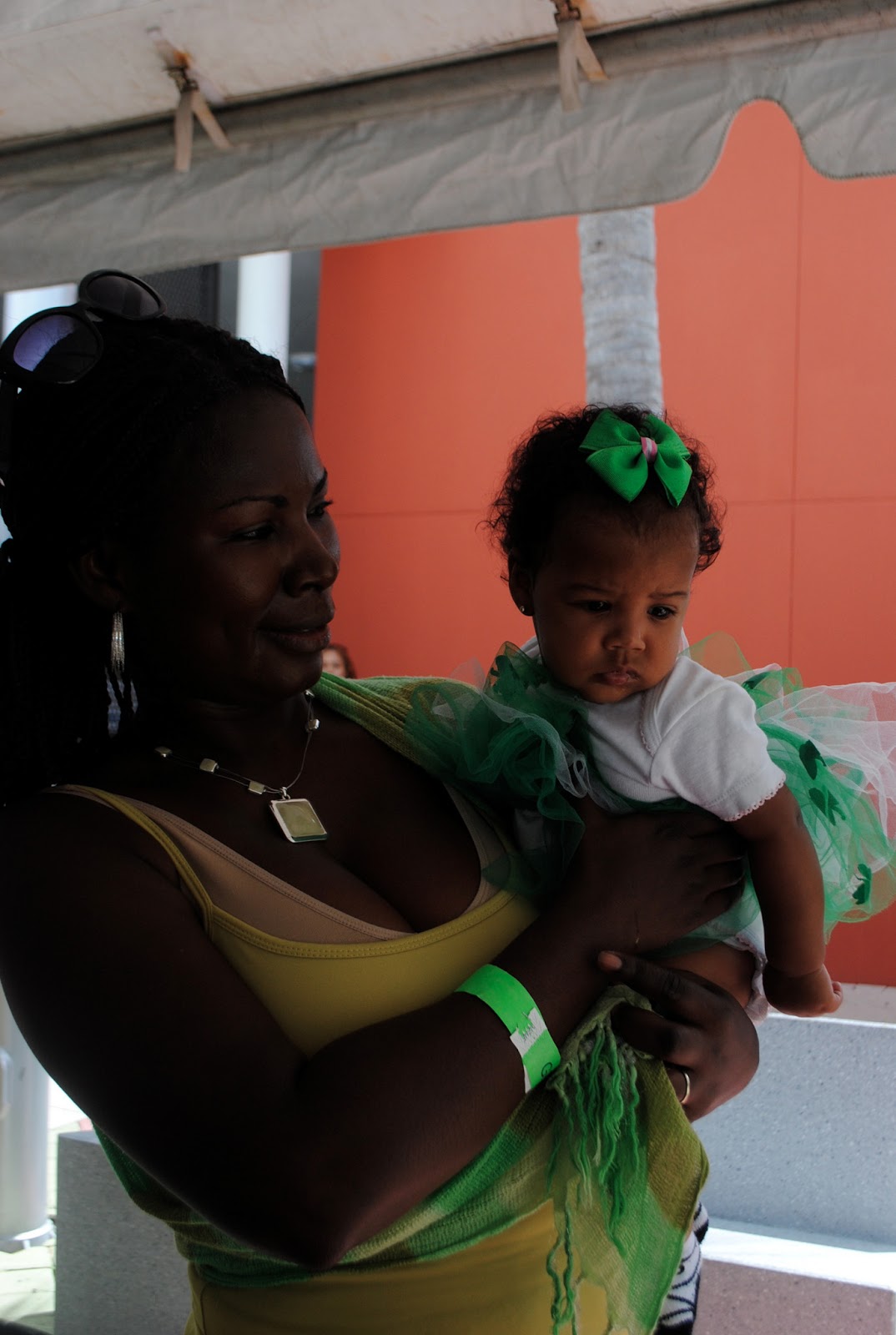
I wish I had gotten the light right for this one. I’m trying to stay within the parameters of the camera's suggested exposure.  What caught my eyes was the side light hitting the child's face, catching a poignant expression, and the flow of the colors from mom to baby, with that good burnt orange in the background. We’re missing the mom’s expression though, and that would have pulled it all together. Maybe that tent top should go, and a little shift would have eliminated the tiny head in the background.


What makes this image  is seeing child and how he has his own point of view.  Mom’s attention is one way, the child's another. The focusing could have been sharper on the baby’s eyes; less sharp for the background.


What caught my eye here was all the green - dad in his shirt, his daughter in her green; the green on the table and butterfly


You have to like the candor of baby’s before they learn to pose!  Not bad, not great. A bit flat in perspective.

The image below almost works.  The subject of the image is placed between the foreground interest – the dummy with the pink tutu- and the real subject, that little girl carefully peeling her banana. Too much green on the left takes our attention away. The grid on the right is OK, but it also might be a little too much causing the little girl to get lost in its pattern.


What do you think?  How would you have made similar images with a single focal length?  I guess that is the beautiful struggle when working with a focal length.  Keep in touch and see how I improve.


MCooling

Saturday, May 4, 2013

Ramblin' Road Trip


I took a road trip in March with two friends and creative forces, Tiffany Napper of Bats on Strings and Megan Victoria of Jupiter Lala. We had a plan: roam across the South, from New Orleans to Nashville,  and make magic with whatever the wind blows our way. 


We each had our essentials for the trip: loaded iPods, a grandfather's ukelele, a flask, handcrafted jewelry, favorite boots and Milk Duds. My essential packing list included several cameras and lenses. I wanted to try and document not just the places where we stopped along the way, but also the improvised, whimsical feeling of the whole trip. There were stops at state borders for impromptu dances and sit-downs in coffee shops and boutiques that turned into collaborative sessions for future business ventures. I wanted to capture the invigorating brisk temperatures, the comfort of an old leather sofa, the luxury of time to just ramble at our own pace through the landscape.


I played with several cameras and lenses on the trip, looking for details and light, in color and black and white. I tried to not be the nerd with the oversized camera bag everywhere I went, though; I limited myself, mostly, to one kind of camera for each stop. A Holga, an old film SLR, my DSLR and a point-and-shooting. What are your essentials for shooting while traveling?


JKay

Saturday, April 20, 2013

SNOW DAY

As the north thaw from a cold winter, Jennifer reflects on the images she made
during her Thanksgiving visit back home.  Shooting in harsh climatic weather
can be both frustrating and rewarding.


It’s been a long time since I’ve seen a snowfall, and so I was childishly excited about the  inch-and-a-half of snow that fell while I was in Pennsylvania for Thanksgiving. I had forgotten how snow makes the landscape a soft, blank canvas where footsteps and errands get scribbled with black lines. The snow kept falling, but people in the neighborhood needed to keep up with their lives, going for a run or going to pick up kids at school. What I started to see in the snow was not the snow itself, but the blank spaces left by moving cars and people. No one stayed to enjoy the snow. Even the sky was empty, the sun seemingly just gone, the sky a blank gray. 


JKay